Residential Plumbing Work
Single-Family Homes
A single-family home in Johannesburg hides more plumbing than you might expect! The answer often starts in the kitchen, where supply lines and drainage systems converge behind cabinets and under the sink.
From there, the work extends to bathrooms, laundry rooms, and the water heater closet. Each space presents its own set of challenges, from low water pressure to leaking joints.
- Bathroom fixtures and shower valves
- Outdoor taps and irrigation connections
- Main water shutoff valves near the street
Plumbers also trace hidden pipes through ceilings and concrete slabs. In older homes, they might replace galvanised steel with copper or PEX. So when you ask where does plumber work, remember that every single-family home offers a unique map of pipes waiting to be serviced.
Apartments and Condos
Stack pipes and shared walls define plumbing work in apartments and condos. The work is vertical. A plumber traces supply lines from a central riser through concrete slabs, often accessing them via ceiling hatches in the unit below. This is a different beast from single-family homes.
In a typical unit, the main bathroom and kitchen are often back to back. This creates a single wet wall where most of the work happens. A plumber might be called for a blocked drain that backs up into the bathtub, a common issue in older blocks where the original cast iron stack is corroded.
Common tasks in this setting include:
– Clearing clogs in shared stack pipes.
– Replacing worn pressure-reducing valves.
– Fixing leaks in the in-slab piping that feeds the shower.
– Servicing the isolation valves on the main supply line.
The building’s age dictates the material. Many condos from the 1970s still use galvanised steel, which fails from the inside out. When a plumber works on these, they must coordinate with body corporates to shut off water to entire sections of the building. The work is rarely isolated to one unit. The answer to where does plumber work here is often cramped, awkward spaces like elevator shafts and maintenance corridors where the main lines run. They also spend time in the basement pump room, checking the booster pumps that push water to the higher floors. Water pressure is a constant issue, and the plumber is the one who balances the system. It is a logistical puzzle, not just a pipe repair.
New Home Construction
Rough-in plumbing begins before the walls exist. The plumber works from a blueprint, positioning pipes in open studs and excavated trenches. What a change from repair work! A bare site holds no fixtures, only potential.
- Laying sewer lines in the foundation bed.
- Running water supply pipes to each planned outlet.
- Installing the vent stack through the roof.
The job demands coordination with bricklayers and electricians. Once the concrete slab is poured, changing a pipe location costs money and delays. In South Africa, a plumber also fits the geyser pressure system. That is where does plumber work during the build, preventing leaks instead of chasing them.
Remodeling Projects
Renovation peels back the skin of a house, revealing the corroded arteries of its original plumbing. Where does plumber work in these half-dismantled ruins? Among the ghostly skeletons of old walls, toppling the very structure they must preserve.
I have seen this labour play out across South African suburbs. The plumber works beside demolition crews, salvaging fixtures from a lifetime of grime. Each project demands careful negotiation with the building&8217;s history.
- Replacing galvanised steel pipes with quiet copper.
- Rerouting drainage beneath a new concrete screed.
- Reinstalling geysers when ceilings collapse under neglect.
The work shifts with every wall you break. A wrong hole in a stud means a flooded kitchen, so the effort becomes a matter of reading the house’s forgotten maps.
Maintenance and Repair Calls
Most people meet their plumber on a Tuesday, after the drain gurgles or the geyser rumbles. The question of where does plumber work becomes suddenly personal. It is in your kitchen, your bathroom, the narrow crawlspace under your floorboards. I spend my days kneeling on tiled floors, flashlight in hand, chasing the source of a slow leak.
Maintenance calls are different from construction. You arrive at a house that looks fine from the street. Inside, taps drip with slow persistence. Pipes knock behind plaster. The work is diagnostic. You trace water pressure, inspect valves, listen for movement. Every repair is a conversation with the house’s habits.
Common calls include:
- Geyser element replacements
- Toilet cistern repairs
- Blocked drain clearing
- Leaking shower trays
Each job is a small puzzle. The plumber works where the water misbehaves, which is anywhere the homeowner cannot fix it alone.
Commercial Plumbing Work
Office Buildings
Office buildings present a unique answer to the question of where does plumber work. These structures are vertical networks of risers, pressure reducers, and recirculation pumps serving dozens of tenants simultaneously. Every floor has its own set of restrooms, kitchenettes, and mechanical rooms. One small leak in a ceiling void can stop an entire floor’s operations.
The plumber’s day might involve:
– unblocking a shared grease trap in the basement
– rebalancing hot water flow to a top-floor staff canteen
– inspecting backflow prevention devices for municipal compliance
For office buildings, timing is everything. A burst pipe at midday means lost productivity and frustrated staff. Many plumbers, myself included, work after hours or during weekends to keep the building running. The commercial context changes the answer to where does plumber work, because the work happens where people are trying to do their jobs, around them and often without them noticing.
Retail Spaces
Walk into any shopping centre in Johannesburg and you will see tile, glass and merchandise. The plumbing sits behind access panels, under display counters and inside shared service ducts. Retail spaces present a different answer to where does plumber work. The work follows foot traffic, not building hours.
A typical morning might involve:
- clearing a blocked floor drain in a supermarket cold room
- replacing a faulty tap in a changing room basin
- adjusting water pressure for an automatic car wash bay
Retail landlords enforce strict quiet hours. We often enter stores after closing, when the only lights are emergency bulbs. The work must be finished before the first delivery truck arrives, and that pressure shapes every decision!
Restaurants and Food Service
A single blocked drain can halt a restaurant’s entire service, and in South Africa, the health inspector’s shutdown order follows quickly. This is a high stakes answer to where does plumber work. The work is dictated by food safety regulations, not office hours. Your day revolves around grease traps, backflow preventers, and the relentless fight against blockages.
A typical service call might involve:
– Clearing a fatberg from the main kitchen line before the dinner rush
– Repairing a high pressure jetter that failed on a stubborn drain
– Replacing a faulty thermostatic valve on a dishwashing machine
The constant flow of hot water, oils, and food waste creates a corrosive environment that wreaks havoc on pipes. We often work shoulder to shoulder with chefs during prep hours, or crawl under three compartment sinks to access valves that have corroded from chemical cleaners. The pressure to restore service is immediate. Every minute the kitchen is down is lost revenue and perishable stock. The work is messy, urgent, and essential, so when you ask where does plumber work, this is one of the most demanding answers.
Hospitals and Healthcare
A single drip in a hospital corridor can halt a scheduled transplant. That is the reality when you ask where does plumber work in healthcare. The work hides behind sterile panels, under sealed floors, and in equipment patients never touch.
My average morning might involve:
- Replacing a mixing valve on a burn ward shower, where temperature is a safety protocol
- Clearing a blocked floor drain in an MRI suite, while avoiding the magnetic field
- Sealing a leak above a neonatal unit, tiptoeing around incubators
Hospitals demand absolute perfection because water feeds dialysis machines, scrub sinks, and emergency showers. A single backflow accident contaminates the entire loop. Any failure puts lives at risk.
Schools and Educational Facilities
A school’s plumbing system faces daily abuse from hundreds of learners. They flush, splash, and occasionally launch foreign objects into the pipes. When you ask where does plumber work in education, the answer is often knee-deep in a trench beside the sports field or inside a ceiling void above the science block.
My typical day at a high school involves:
- Unblocking a washbasin trap clogged with paper towels
- Repairing a drinking fountain that sprays across the corridor
- Replacing a flush valve in the staff toilet
Every job happens around a timetable. A burst pipe during exam season becomes a crisis. Learners cannot write tests with water dripping on their heads.
Industrial and Specialized Plumbing
Manufacturing Plants
Within industrial and specialized plumbing manufacturing plants, the plumber operates as a quiet guardian of intricate fluid systems. These facilities rely on precise networks that carry corrosive chemicals, high pressure steam, and ultrapure water. Where does plumber work in such a setting? Directly beside production lines and heavy machinery, often within arm’s reach of processes that demand absolute precision.
Their tasks shift with each shift change. One morning they might recalibrate a valve bank; by afternoon, they are tracing a pressure drop through a tangled web of stainless steel pipework. It is a world of bespoke fittings and custom fabrication, where standard solutions rarely apply.
- Solder copper lines for cooling loops
- Install acid resistant drainage systems
- Service pneumatic control valves
This work carries an understated elegance, a dance between mechanical necessity and human ingenuity.
Chemical and Processing Facilities
In chemical and processing facilities, the question of where does plumber work takes on greater urgency. These environments hold volatile compounds and caustic reagents, so every joint and seal carries weight. I have seen plumbers navigate catwalks above reaction vessels, their hands steady on wrenches while pressure gauges fluctuate nearby. They install double-walled piping for hazardous waste, calibrate backflow preventers, and replace gaskets on chlorine lines. The work demands constant vigilance, because a single drip can become a crisis!
– Lining storage tanks with chemical resistant membranes
– Testing relief valves under extreme conditions
– Mapping pipe networks for emergency shutdowns
Each task answers where does plumber work with a simple truth: wherever the chemistry demands precision. The air smells of solvent and metal, and the plumber moves through it as a necessary presence.
Power Plants
Almost 90% of South Africa’s electricity flows from coal plants, and inside those roaring halls, the question of where does plumber work finds a new answer. I have climbed scaffolding beside turbine decks, watching plumbers maintain the closed-loop systems that carry superheated water. They bleed air from condenser tubes, replace eroded impellers in circulating pumps, and weld seams on feedwater heaters.
Pressure here often exceeds 200 bar. A plumber’s torque wrench becomes a precision instrument. They work in shifts because the plant runs continuously. Some days they crawl through manholes to inspect buried cooling lines. Other days they balance relief valves on boiler drums. The tasks are varied and unforgiving:
- Clearing scale from heat exchanger plates
- Replacing sacrificial anodes in storage tanks
- Adjusting gland seals on high-pressure valves
Each repair keeps the turbines spinning. Where does plumber work, then? In the steam, the grit, the hum of generators. It powers the lights of Johannesburg and Cape Town.
Marine and Offshore
Where does plumber work when the ground is a deck rolling on the swells? On marine and offshore installations, plumbers handle salt corrosion and constant motion. They maintain reverse osmosis units, bilge pumps, and ballast systems on cargo vessels and drilling rigs.
I once replaced a sea water valve in the engine room of a supply ship near Durban, working in dim light while the hull moved. Corrosion attacks every joint, so tasks shift daily:
- Inspecting sacrificial anodes
- Reseating gate valves
- Balancing hydraulic accumulators
These plumbers also service accommodation blocks, repairing vacuum toilets and steam lines. Their skills keep operations alive far from shore, proving that where does plumber work reaches beyond dry land.
Municipal Water Systems
Ask where does plumber work and you might think of repairs in a bathroom, but municipal water systems reveal a larger answer. These plumbers maintain treatment plants, pump stations, and the buried arteries of distribution networks. I once stood beside a colleague in a valve chamber outside Durban, replacing a gate valve that controlled supply to a thousand homes. The air smelled of chlorine and wet concrete!
- Inspecting chlorination equipment for accurate dosing
- Monitoring pressure at critical nodes to prevent pipe bursts
- Flushing dead-end mains to remove sediment and biofilms
Every task protects the water that flows into schools, hospitals, and factories. That link between effort and public health is why the question of where does plumber work always extends into municipal infrastructure.
Outdoor and Public Works
Sewer and Drain Systems
Beneath the asphalt of every South African town lies a hidden network. The question of where does plumber work moves beyond walls and rooftops into the city’s buried infrastructure. Stormwater drains, culverts, and public sewer lines accumulate silt, roots, and detritus of daily life. A plumber descends into these chambers with lamps and wrenches, unblocking what municipal crews cannot reach.
Pumping stations fail without warning. Overflow spills into streets when debris chokes a main line. This trade demands nerves of iron and a map of every pipe beneath the pavement.
Consider the range:
- Public sewer mains and manhole access points
- Drainage culverts under roads and parking lots
- Municipal stormwater catch basins
The answer to where does plumber work surfaces in the open air. The sun exposes what darkness hides. Buried clay pipes crack under shifting Johannesburg soil. Tree roots pierce pipe joints. It is lonely, dirty work, and essential.
Water Main Installations
Water main installations push plumbers into open excavations. On the outskirts of Pretoria, crews lower ductile iron pipes into trenches while traffic detours around barriers. The question of where does plumber work finds an answer in the raw space between the tar road and the buried pipe.
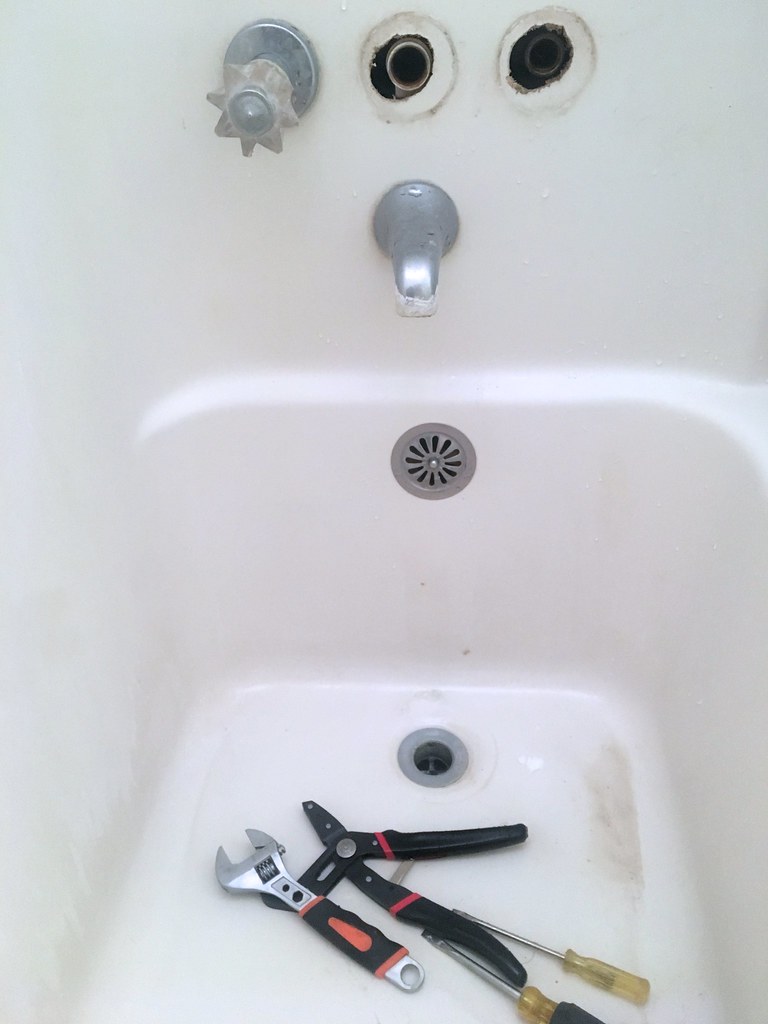
A plumber reads soil conditions, checks pipe alignment, and bolts valves to flanges. Mistakes surface only when the pressure test fails.
Responsibilities on site include:
- Setting pipes to the correct gradient
- Installing isolation valves and air release valves
- Chlorinating the finished main before service
The client is the municipality. The schedule runs on rain forecasts and road closure permits.
Public Restrooms and Parks
The work shifts from trenches to tiled floors when you answer the question of where does plumber work in public parks and restrooms. These buildings sit in open spaces, surrounded by trees and walking paths.
Public restrooms in South African parks face heavy strain. School groups visit on weekdays, joggers stop in the mornings, and weekend events push the fixtures past their limits. The maintenance list reads like a triage report:
- Replacing diaphragm valves that stick from sand ingress
- Unblocking floor drains choked with litter
- Repairing flush mechanisms stripped by regular use
I have seen the same restroom in a Pretoria park cycle through three vandalism repairs in a single month. The city’s maintenance team keeps a stock of spare parts in a lockbox at the warden’s office. The question of where does plumber work here has a simple answer. Wherever the pipes meet the public.
Construction Sites
If you want to see a plumber at their grittiest, skip the neat bathrooms and head to an outdoor construction site. Here, the question of where does plumber work becomes a matter of dodging graders and locating the exact spot where a new stormwater line will meet an existing main. The ground is rarely level, and the plans are rarely straightforward either.
On these sites, a plumber coordinates with surveyors and crane operators. They install temporary drainage, reroute pipes for foundation works, and weld joints in dust so thick it coats your teeth. The conditions test each skill. I once watched a colleague clear a blocked culvert while a bakkie reversing beeped a rhythm behind him. Glamorous? No. Effective? Absolutely. So when you ask where does plumber work, remember the mud, the noise, and the long hours outdoors.
Emergency Response and Disaster Relief
Flip to a disaster zone and the answer to where does plumber work changes with each emergency. Emergency response and public works relief put plumbers on flooded streets, collapsed trench lines, and temporary camps. They do not wait for a clean workspace. They wade in.
A ruptured main after a storm sends water pouring through a neighbourhood. Repair crews need someone who can isolate a supply line while the rain keeps falling. Plumbers also handle temporary sanitation units, portable water connections, and damaged valve replacements. Relief efforts depend on these unglamorous fixes.
In South Africa, municipal teams mobilise plumbers during droughts and floods. The location is less important than the response time. Where does plumber work in these moments? Under a tarpaulin, knee deep in slurry, or on a generator lit patch of gravel. One misplaced cut can leave a suburb without water for days.

0 Comments