Understanding a Plumber Learnership
Defining a Plumber Learnership and How It Works
The average age of a qualified artisan in South Africa is climbing, a fact that underscores the urgency behind structured skills transfer. A plumber learnership is a formal, outcome-based program that pairs theoretical instruction with paid, practical workplace experience. It is not a short course or a simple internship. The framework is governed by the Skills Development Act, ensuring the training meets national industry standards.
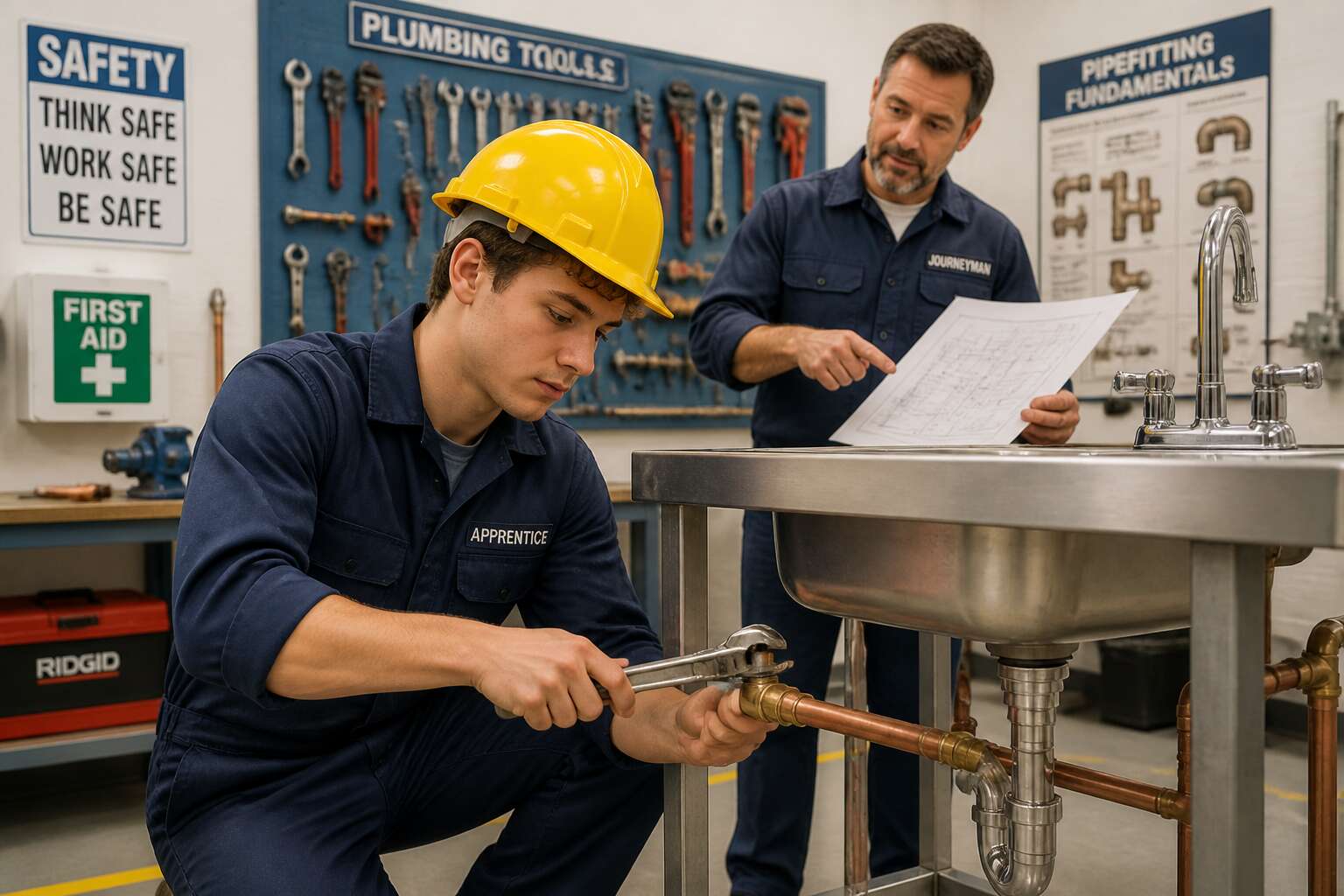
The mechanism is deceptively straightforward. A learner signs a contract with an employer and a training provider. The theoretical portion covers water reticulation, drainage systems, and sanitation regulations. The practical component takes place on active sites, where a mentor oversees the application of those principles. This dual approach ensures the candidate develops a holistic understanding of the trade.

The typical journey follows a clear trajectory:
1. Recruitment and contract signing with a host employer.
2. Structured classroom training at an accredited college.
3. Rotation through different worksites and tasks to build competence.
4. Ongoing assessment against unit standards.
5. Final trade test to achieve a recognized qualification.
Upon completion, the candidate does not merely hold a certificate. They possess a nationally recognized qualification that signals readiness for the demands of the industry. The process is rigorous, and the time investment is significant, yet the output is a professional equipped to handle complex plumbing challenges. This structured pathway directly counters the skills gap that leaves many municipalities and private firms scrambling for competent staff. It transforms raw potential into verified capability, which is the ultimate objective of any thoroughly designed plumber learnership.
Who Is an Ideal Candidate for the Program
Only 10,000 artisans are expected to retire from the South African plumbing sector over the next five years, leaving a void that demands fresh, competent hands. The ideal candidate for a plumber learnership is not necessarily the person who has already tinkered with pipes, but rather the individual who demonstrates a quiet, methodical patience. This program suits someone who prefers tangible results over abstract theory, and who can find satisfaction in a system that works flawlessly because of a properly fitted joint.
The right person often shows a blend of practical intelligence and physical stamina. They are comfortable working in confined spaces or on scaffolding, and they understand that the job requires more than strength; it demands precision. A successful learner is typically someone who:
– Possesses a mechanical aptitude and enjoys problem solving
– Can follow strict safety protocols without being asked twice
– Has good communication skills to liaise with clients and site managers
– Shows resilience for work that is often dirty, wet, and physically demanding
Applicants usually range from recent matriculants with mathematics and science to career changers seeking stability. A plumber learnership offers a structured path for those who find traditional academic environments stifling but still want formal recognition. The candidate must be prepared for a journey where assessment is constant and feedback is immediate. They should view the trade not as a fallback option, but as a deliberate craft that can lead to entrepreneurship or specialised industrial work. The ideal learner possesses the foresight to see a long term career, not just a job, and the humility to learn from every leaky valve and blocked drain they encounter.
Duration and Structural Breakdown of the Training
How long does a plumber learnership actually take? In South Africa, the typical programme stretches over 24 to 36 months, depending on the chosen specialisation and the employer’s training schedule. That might sound like a long stretch, but consider what you are learning: everything from copper pipe soldering to water reticulation systems. The plumber learnership is not a quick ticket; it is a measured climb.
The structural breakdown is where the real design shines. You spend roughly 70% of your time on site, working under a qualified artisan, and the remaining 30% in a training academy. This split means you are paid while you learn, which softens the blow of those early mornings.
- Level 1: Basics of tools, materials, and workplace safety.
- Level 2: Drainage installation and fixture fitting.
- Level 3: Advanced water supply and pipe testing.
Each level ends with a trade test. Pass it, and you earn official recognition. Miss it, and you repeat the module. Simple, but demanding. The plumber learnership rewards patience and punishes shortcuts, which is exactly what a reliable piping system demands.
The Difference Between a Learnership, Apprenticeship, and Internship
Most people picture the old apprenticeship model when they think of learning a trade. You know the drill: find a master plumber, shadow them for years, and hope you absorb enough to pass a test. A plumber learnership operates on a completely different framework. It is a structured, outcome-based programme registered against a national qualification. The apprenticeship relies on informal workplace hours. The learnership demands a fixed curriculum and a formal agreement between you, the employer, and a training provider.
The distinction becomes sharper when you add internships to the mix. An internship usually offers exposure but no guarantee of a full qualification. It is a short-term placement. A learnership, however, combines theoretical learning with practical work experience and ends with an accredited trade test. The internship gives you a taste. The learnership gives you a credential.
– A learnership is a registered qualification with SAQA credits.
– An apprenticeship is time-served under a qualified artisan.
– An internship is typically unpaid or minimal stipend work experience.
The plumber learnership is the only one of the three that guarantees a nationally recognised certificate upon successful completion. That is the key difference. You do not simply accumulate hours or write a report. You prove your skills against a national standard, module by module, until you earn the right to call yourself a qualified plumber.
Key Benefits of Completing a Plumber Learnership
Building Hands-On Practical Skills in Real Work Environments
A plumber learnership rewards persistence with something deeper than a certificate: the confidence gained from repeated, real world practice. In South Africa, where water infrastructure depends on reliable technicians, this practical exposure is essential, not optional. You learn to troubleshoot live systems, adapt to unpredictable conditions, and work safely beside experienced artisans.
Watching a video is one thing. Threading a pipe under a sink is another. The learnership immerses you in the latter, building tactile knowledge of materials, tools, and pressure points. This hands-on competence makes you employable. Employers want candidates who solve problems on the spot.
- Repairing geysers under deadline
- Finding leaks in complex piping networks
- Working with PVC, copper, and steel fittings
Every task adds to your mental catalogue of solutions. You also learn to communicate with clients and contractors, a skill often missing in trade work. By finishing the plumber learnership, you do not merely know plumbing. You embody it.
Earning a Stipend While You Learn
Money changes how you learn. When a plumber learnership includes a stipend, you are not waiting to become valuable. You are valued from day one.
This steady allowance covers transport, meals, and small household needs. It removes the constant financial worry from your training.
- Monthly payments arrive on schedule
- Study materials are supplied free
- You avoid going into debt for unpaid courses
You gain practical skills and a qualification without sacrificing your family’s stability. That is the benefit of earning while you learn.
Gaining a Recognised National Qualification
The final outcome of a plumber learnership is more than a certificate. It is a nationally recognised qualification that carries weight across South Africa’s construction, maintenance, and infrastructure sectors. This credential tells employers you have met a formal standard. It proves your competence through structured assessment, not merely through time spent on a job site.
This qualification positions you as a certified artisan. It opens doors to roles that require proof of skill, such as municipal maintenance work or commercial plumbing contracts. Trade test preparation is often included, which means you are equipped to pass the assessments that matter for official accreditation.
A plumber learnership delivers these professional assets:
– A formal qualification aligned with industry regulations
– Documentation of your practical training hours
– Eligibility for trade test registration
– A credential that supports career advancement into supervisory roles
The document itself becomes a foundation. It allows you to pursue further certifications in specialised areas. And it remains with you as proof of your professional growth. That is the value of earning a recognised national qualification through a plumber learnership. It is an asset that appreciates alongside your skills.
Boosting Employment Opportunities and Job Security
Job security in South Africa often feels like a fragile promise. A plumber learnership changes that equation. It places you inside a trade where demand remains constant. While many industries shed workers during economic downturns, plumbing keeps moving. Water flows through every home, hospital, and factory, and that water requires qualified people to install and maintain the systems carrying it.
Employers prefer candidates who complete structured programmes. The risk of hiring is lower when someone arrives with documented experience and verified skills. This preference becomes a tangible advantage during the application process.
Consider the employment paths a plumber learnership opens:
– Municipal posts with pension benefits
– Contracts with private construction firms
– Roles with maintenance and infrastructure companies
Each avenue provides a regular salary and medical aid. Each one rests on skills that cannot be outsourced or automated. That is the kind of security worth building a career on.
Creating a Foundation for Specialisation and Entrepreneurship
Completing a plumber learnership gives you the groundwork to pursue specialised certifications that increase your earning capacity. You can move into areas like gas fitting, solar water heating, or industrial pipe installation. Each of these fields demands a higher skill level and commands premium rates.
- Advanced water reticulation
- Fire protection systems
- Borehole and irrigation installation
Entrepreneurship also becomes a realistic path. With a recognised qualification, you can register your own plumbing business on the CIDB database and bid for municipal or private tenders. I have seen plumber learnership graduates build sustainable enterprises from nothing but a van and a toolbox. That foundation is the real payoff.
Minimum Requirements to Apply for a Plumbing Learnership
Educational Background and Matric Requirements
South Africa’s plumbing sector demands certified credentials, starting with your school leaving certificate. The plumber learnership pathway requires a National Senior Certificate (NSC) or an equivalent NQF Level 4 qualification. Mathematics and Physical Science are often required subjects, since plumbing involves precise calculations and a working knowledge of water systems.
Some employers accept a General Education and Training Certificate (GETC) for adult applicants. Others demand an N2 qualification with the relevant trade theory. The programme advertises which route it recognises.
- A certified copy of your identity document
- Your matric certificate or statement of results
- Proof of residence
These documents complete the application. Without them, the training provider cannot register you with the relevant SETA. Requirements vary by province and employer, so the advertised criteria remain the definitive reference in my experience.
Age and Physical Fitness Considerations
Applicants must be at least 16 years old, though most employers prefer candidates between 18 and 35. The age ceiling exists because the plumber learnership involves a formal contract, and younger candidates often require additional supervision on site. I have seen mature applicants in their forties thrive, so do not assume age alone disqualifies you.
Physical fitness matters more than most applicants expect. A typical day includes kneeling under basins, carrying copper pipes, and working in cramped ceiling spaces. Your doctor may need to confirm you can handle these demands, especially if you have a chronic condition.
- A medical clearance certificate from your doctor
- Comfort with heights and confined spaces
- Manual dexterity in both hands
Some training centres conduct their own fitness assessment before accepting you into the plumber learnership. The practical component leaves little room for accommodation once training starts, and trainers will notice if you struggle.
Required Documentation and Certifications
The paperwork for a plumber learnership requires more care than most applicants expect. Beyond your certified ID copy and matric results, training providers look for evidence that you understand the commitment. A brief motivational letter often carries weight, especially when applications outnumber available positions. I have seen applications rejected simply because the certified copy was older than three months.
Most training centres ask for a specific set of documents before they will consider your application:
- A certified copy of your South African ID
- Your matric certificate or equivalent qualification
- A medical clearance certificate confirming physical readiness
- Proof of address, often a utility bill or affidavit
Bank details and a valid SARS registration may also be requested, since stipends flow through formal payroll systems. Organising these documents before applications open gives you a genuine advantage in the plumber learnership selection process.
Essential Soft Skills and Personal Attributes
Meeting the baseline criteria for a plumber learnership is only the first layer. Training providers also evaluate your attitude, reliability, and willingness to learn under pressure. A candidate who shows up prepared and curious often outperforms one with perfect marks but little drive.
Beyond formal qualifications, certain personal attributes determine success in this trade:
- Problem solving ability, since each plumbing fault presents a unique puzzle
- Manual dexterity and spatial awareness for working with tools in tight spaces
- Patience with repetitive tasks and demanding supervisors
- Clear communication skills when dealing with clients and team members
These qualities, combined with your paperwork, tell a complete story. The plumber learnership rewards those who treat every task as a craft worth mastering.
Language Proficiency and Communication Skills
Language proficiency is a non negotiable minimum requirement in South Africa. Training providers test your English literacy before you sign a plumber learnership contract. This test ensures you can read the curriculum and interpret safety signage. Without this, your application stops there! Communication skills also carry weight during the selection interview. You must explain work experience clearly and show you listen without jumping to conclusions. Assessors probe for:
- The ability to summarise a fault description given by a homeowner.
- The capacity to relay instructions from a site manager to a colleague.
- The discipline to ask for clarity when a term is unfamiliar.
In my experience, language acts as the operating system for practical talents. A plumber learnership will not simply hand you a pipe wrench; you prove you can understand the spoken and written world of the trade first. This filters out skilled candidates who struggle to absorb theory.
Where to Find Learnership Opportunities and How to Apply
Government Programmes and Public Works Initiatives
Finding a plumber learnership in South Africa often requires knowing which government doors to knock on. The Department of Employment and Labour runs the Employment Services System of South Africa (ESSA), a database where registered candidates can view open learnerships. The Expanded Public Works Programme (EPWP) is another strong route, especially for those who prefer a structured, public-sector start.
- Provincial public works departments that coordinate learnership intakes.
- Municipal infrastructure units focused on water and sanitation projects.
- Sector Education and Training Authorities such as MERSETA, which fund plumbing learnerships.
When applying, expect a straightforward documentation process. Submit your ID, matric certificate, and proof of address through the specified portal, or visit a local public works office. Some programmes require ESSA registration before you can apply, so do that first to avoid delays. The process moves at its own pace, but it remains one of the most reliable paths to a qualified trade.
Online Job Portals and Learnership Directories
Chasing a plumber learnership online is a different routine than queueing at a government office. The private sector posts most of its openings through digital channels, so your first step is setting up profiles on the right platforms. The main ones to watch:
- Indeed and PNet, which carry daily postings for plumbing trainees.
- Career24 and Job Mail, where employers list learnerships directly.
- Learnerships.co.za, a directory that aggregates opportunities from multiple sources.
Registration is straightforward. Create a profile, upload your CV, and set alerts for plumber learnership vacancies. Many portals allow one-click applications, which makes the process fast, but it also raises the competition. Opportunities move within hours, so successful applicants check these directories every morning. Some platforms email new listings to registered users, which changes the pace of the search entirely.
Networking and Referral Strategies that Actually Work
While online portals capture most public attention, the quieter paths often open first. A plumber learnership rarely gets advertised before someone already in the industry hears about it. Networking carries real weight.
Start with the people you already know. Plumbers you have encountered through school projects, community work, or family connections. Ask them directly about upcoming trainee positions. Most tradespeople remember their own struggle starting out.
For referrals, make yourself easy to recommend. Prepare a one page CV that highlights your practical attitude. Leave it with plumbing supply stores, hardware shops, and construction site managers. These businesses talk to each other.
- Attend local industry events and open days
- Join community WhatsApp groups for construction and maintenance workers
- Speak to your municipality’s maintenance department
A referral does not guarantee placement. But it gets your name mentioned when a plumber learnership becomes available. And that mention often matters more than any online application.
Crafting a Winning CV and Cover Letter for the Application
A plumber learnership rarely announces itself. You find it where the industry works. Walk into wholesale plumbing suppliers and ask for the noticeboard. A simple request often works wonders! Visit trade test centres. Sit in the waiting rooms of municipal maintenance offices. Each conversation counts. Keep a folder with you at all times containing:
- A one page CV
- A short cover letter
- Certified copies of your ID and qualifications
Your CV speaks before you do. Lead with practical experience, not your matric subjects. Name the tools you own and the tasks you have performed. Mention your driver’s licence if you have one. Your cover letter should name the exact plumber learnership you want and state plainly why you are the person for it. A short letter with real details beats a long one that says nothing.
Preparing for the Interview and Aptitude Assessments
Most applicants for a plumber learnership are screened out by a simple arithmetic error on the aptitude test. The opportunity often appears at trade test centres, wholesale suppliers, or the noticeboard at a municipal maintenance office. When you find one, apply the same day. Submit a one-page CV that names your tools, a cover letter that states your exact interest, and certified copies of your documents.
- Numerical reasoning and spatial awareness
- Familiarity with pipework and safety protocols
- A practical problem-solving exercise
The interview for a plumber learnership tests your character. Expect questions about your motivation, your punctuality, and your attitude toward a supervisor. Every response should show your readiness to learn and your willingness to accept direction. Preparation means reviewing basic trade principles and practicing calculations until they feel natural.
Career Pathways After Completing the Learnership
Becoming a Qualified Plumber and Working for a Contractor
The moment you receive your qualification, the real journey begins. Many newly qualified plumbers move straight into contractor work, which offers immediate income and field experience.
Working for a contractor exposes you to residential, commercial, and industrial sites. You learn to navigate client expectations, safety protocols, and time pressures.
- Large firms provide consistent work and structured progression.
- Smaller operations demand versatility and accelerate your learning.
The choice depends on your temperament and career goals. A plumber learnership equips you with the foundational competence to move confidently between these options.
Pursuing Advanced Certifications and Specialisations
Few newly qualified plumbers realise that the initial certification is merely the entry point. The real value of a plumber learnership reveals itself in the years that follow, when the foundational skills start opening unexpected doors. Specialised fields offer significantly higher earning potential. A plumber working on solar water heating installations, for instance, commands a different rate than someone handling routine drainage repairs. Gas fitting certifications require additional examinations, yet they lead to consistent demand. Irrigation system design, heat pump maintenance, and green building retrofits also reward those who invest in further study.
Some professionals choose to pursue water quality analysis or fire suppression system installation. These niches demand focused training but produce less competition. The plumber learnership gives you the confidence to identify which direction suits your strengths. Each specialisation requires its own certification pathway, often taking six to twelve months of part time study. The investment pays off through premium rates and more selective project choices. Every additional skill you acquire builds a professional identity that distinguishes you from generalist competitors.
Starting Your Own Plumbing Business
The jump from employee to business owner is a profound psychological shift, not just a logistical one. The same problem solving skills that made you competent under supervision now become the bedrock of a much riskier venture. Budgeting for tools, insurance, and transport demands a different kind of discipline than arriving on time for a shift. Your plumber learnership provides the technical fluency, but it rarely prepares you for the loneliness of decision making.
Running your own operation involves tasks that compete for your time.
- Pricing quotes accurately to cover overheads and downtime.
- Managing client expectations when projects hit unavoidable delays.
- Handling debt collection without damaging professional relationships.
The first few contracts will test your nerve. Success depends on patient repetition and consistent quality. This path offers real autonomy, but only for those who can tolerate the ambiguity that comes with every new job. The foundation from your plumber learnership gives you the confidence to stand behind your work. That credibility becomes the engine for referrals. Many choose this route after several years in the field. They understand that a certificate is just a piece of paper, but a reputation is built on solved problems.
Continued Learning and Professional Development Opportunities
The South African plumbing sector rewards those who treat the trade as a discipline, not a destination. Completing a plumber learnership leads to steady roles with contractors, property developers, and municipal maintenance units. Others move into facilities management for hospitals, schools, and corporate estates, where practical troubleshooting remains in constant demand.
Continued learning keeps you relevant, and the options are concrete:
- Short courses in water conservation and backflow prevention.
- Manufacturer training on new piping materials and smart fixtures.
- Health and safety refreshers that satisfy site requirements.
Each qualification improves your position when negotiating a salary or bidding for projects. I have watched plumbers advance quickly because they dedicated a single afternoon to focused study. Industry boards expect you to maintain current records. The plumber learnership provides the baseline, and professional development preserves your momentum!
Earning Potential and Salary Expectations for Qualified Plumbers
Two hundred and fifty thousand rand a year is a realistic target for a qualified plumber in South Africa, and that figure only climbs with experience. Once you complete your plumber learnership, the world of trade opens up in ways that a purely academic path cannot match.
The journey typically begins with employment under a master plumber or with a mid-sized contracting firm. This is where theory transforms into instinct. You will learn how to quote accurately, manage client relationships, and troubleshoot under pressure.
– Municipal maintenance departments offer stable, pension-backed roles.
– Property development firms need plumbers for new builds and renovations.
– Facilities management companies require in-house plumbers for hospitals and corporate complexes.
Salary expectations improve with each skill you add. A newly qualified plumber earns between R8 000 and R15 000 per month. After two years of consistent work, that figure can rise to R20 000. Plumbers who specialise in solar water heating, gas installations, or commercial systems command even higher rates. The plumber learnership is your entry ticket, but your earning ceiling depends entirely on the specialities you pursue.



0 Comments