Understanding Camera Inspection Technology
How a Plumber Uses a Camera Inspection to Diagnose Issues
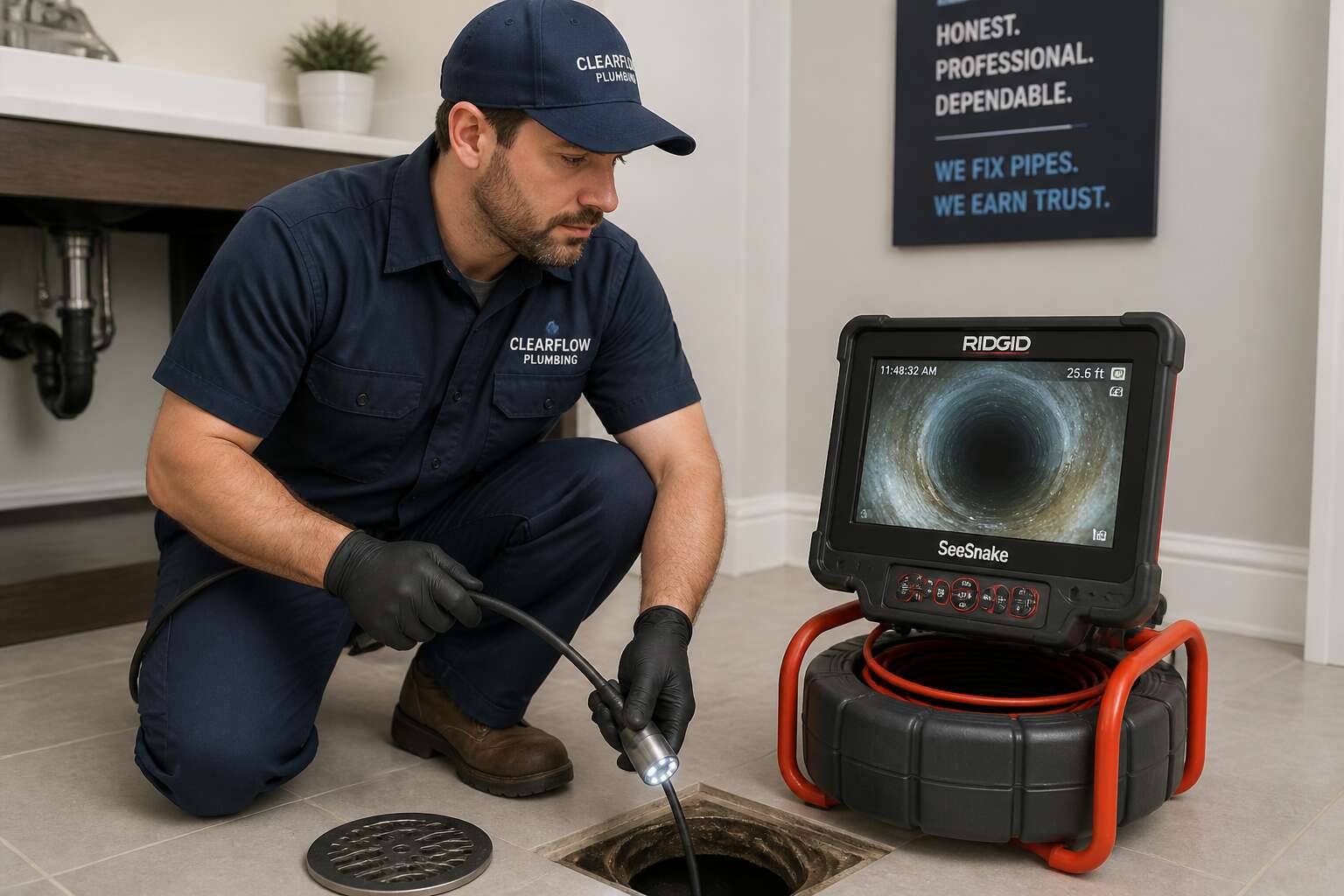
Understanding camera inspection technology begins with the camera itself. A plumber with camera inspection uses a waterproof probe attached to a flexible cable. This probe sends real time footage to a screen above ground. The process is quick and non invasive. Instead of digging blindly, the plumber watches the pipe’s interior on a monitor.
In South Africa, many homes have old clay or cast iron pipes. These materials degrade unpredictably. A camera inspection reveals the exact state of the line, from minor scale to a complete collapse. Here are three common problems detected:
- Root intrusion through cracked joints
- Grease accumulation narrowing the flow
- Offset pipes causing repeated backups
Once the issue is visible, the plumber can plan a targeted repair. A plumber with camera inspection provides certainty where there was once only suspicion. This technology saves time and spares your property from unnecessary damage!
The Equipment Behind Video Pipe Inspection
Most homeowners never think about what actually goes into a video pipe inspection. The equipment deserves attention. A modern drain camera carries a wide angle lens, bright LED lighting, and a high definition sensor inside a housing smaller than a fist. It pushes through water, mud, and debris while delivering crisp footage every second!
In our work, a plumber with camera inspection relies on only a handful of core components:
- A flexible push rod or self-levelling drum that guides the camera head through bends.
- A locator transmitter, known as a sonde, that traces the camera’s depth from above ground.
- A recording unit that stores the footage for your own records.
Each component earns its place. The rod steadies the head. The sonde maps the pipeline. The recording unit turns a diagnosis into durable evidence. That is the certainty a plumber with camera inspection brings to your South African home.
Common Plumbing Problems That Cameras Uncover
Camera inspection technology converts a dark, buried pipe into a live video feed. That feed exposes grease dams, invading roots, collapsed sections, and offset joints that would otherwise stay hidden until they became a crisis. A plumber with camera inspection reads these images to locate the exact fault, saving hours of digging.
Some issues are obvious in the footage. Others need a trained eye, such as a pinhole leak showing up as slight discolouration or a belly in the pipe where debris patiently collects. Every South African homeowner eventually faces a stubborn drain. The choice is guessing or knowing.
Common problems uncovered:
- Tree root intrusion through pipe joints.
- Mineral scale narrowing the flow path.
- Misaligned or separated pipe segments.
- Foreign objects lodged in unexpected places.
That camera saves time, money, and patience. A plumber with camera inspection provides a diagnosis grounded in evidence.
The Process of a Video Pipe Inspection
Preparing the Home and Access Points
The unglamorous truth is that a video pipe inspection requires your cooperation before the technician ever switches on the monitor. A plumber with camera inspection relies on access points located within your home, and your residence’s layout dictates how smoothly that first stage unfolds.
Beneath every basin, inside the garage, and along the exterior wall sit the entry points for this procedure. Those cabinets under the bathroom sink that hold spare sponges and an abandoned bottle of cleaner must be emptied. The technician needs an unobstructed path to the drain, so clear the way!
- Locate all outdoor cleanout caps, often near the property boundary or driveway.
- Clear the storage beneath every sink, including the kitchen.
- Confirm the position of your inspection ports, typically in the garage or roof cavity.
Showing a plumber with camera inspection these spots without a frantic search provides a simple courtesy. It also allows them to begin the actual inspection sooner, which ultimately reduces your bill.
What the Camera Sees During the Inspection
The first time I watched a plumber with camera inspection lower a lens into a waste line, I expected a black void. Instead, the monitor lit up with sediment, mineral scale, and the faint sheen of moisture on a cracked clay pipe. That moment rewires your understanding of what lies beneath your garden.
The camera’s eye captures every joint and junction as the cable advances. You see the build-up of years, the displaced gaskets, and the hairline fractures that are still dry. The technician marks the depth of each anomaly, building a precise map of your drainage network. It’s a revelation, not a guess!
The process is methodical. A plumber with camera inspection will zoom in on a suspicious area, adjusting the light to reveal the true condition of the pipe wall. The live feed records:
- The water line, revealing a pipe belly.
- The joint gaps, showing root intrusion.
- The pipe material, indicating its reaction to the local soil.
Real-Time Viewing and Recording for Accuracy
Watching the monitor during a live feed is one thing, but the recording is where truth lives. A plumber with camera inspection does not rely on memory. The digital record captures every angle, every pause, and every adjustment. Later, I can replay a section to verify a hairline crack or confirm the depth of a displaced joint.
The process is deliberate. The technician narrates findings as the cable advances, calling out footage markers. This recorded evidence becomes the baseline for future comparisons. It eliminates guesswork. Real-time viewing lets the technician react instantly, while the recording ensures nothing is lost.
How the Plumber Interprets the Footage
The cable slides forward at a steady pace. The plumber with camera inspection watches the screen, noting how the pipe reacts to each twist and turn. Water flow, pipe material, and joint alignment all tell a story. A sudden change in surface texture can mean scale buildup. A ripple in the image often signals a crack beneath the lining.
Interpretation requires patience. The technician compares each frame against known pipe standards. He measures distances using the cable counter. He watches how debris moves with the current. That movement reveals whether a blockage is solid or merely settled sediment.
Here is a quick look at what he studies:
– The shape of the water line inside the pipe
– The angle of joints between sections
– The colour and condition of the pipe wall
– The speed at which water drains past the lens
Every detail becomes part of the final report. The plumber with camera inspection does not guess. He points at the screen and explains what each mark means. I have seen this process save clients thousands by catching small problems before they spread.
Key Benefits of Hiring a Professional with Camera Inspection
Pinpointing the Exact Problem Without Unnecessary Digging
In older Johannesburg suburbs, guessing where a drain has failed often means tearing up a paved yard for nothing. A professional with a camera inspection removes that guesswork entirely. The technician threads a waterproof lens into the line, and the footage shows the exact crack, blockage, or displaced joint. You pay for a targeted repair, not a demolition project.
The practical gains are straightforward:
– You avoid unnecessary digging across flower beds or driveways.
– You get a clear report before approving any work.
– You reduce labour time because the crew goes straight to the fault.
That precision matters when municipal bylaws restrict excavation and when you want to protect mature trees. Hiring a plumber with camera inspection means the first hole is the last hole, and that saves both your property and your budget.
Locating Hidden Clogs, Roots, and Pipe Damage
Most homeowners only discover a drain problem when the water stops moving. By then, the damage has been developing for weeks. Hiring a plumber with camera inspection changes the situation. The camera reveals what lies beneath without speculation. It finds the exact point where roots have intruded, where grease has hardened, or where a pipe has collapsed entirely.
What makes this valuable is the certainty it brings. You stop paying for guesses. You stop authorising exploratory work that may not solve anything. A plumber with camera inspection gives you footage that shows the truth in real time, and that truth lets you decide with confidence.
Some benefits stand out:
- Hidden clogs become visible immediately
- Root intrusion is confirmed before any cutting
- Pipe damage is assessed without excavation
Each finding narrows the scope of work. You know what the repair involves before the first tool comes out.
Saving Time and Money on Repairs
Every hour of guesswork in plumbing repair costs real money. A plumber with camera inspection cuts those wasted hours to near zero. You see the exact fault line before authorising a single excavation. That alone can save thousands of rand on labour and restoration.
The savings extend beyond the immediate fix. When the camera shows a clean pipe, you avoid paying for unnecessary replacements. When it shows a small crack, you address it before it becomes a burst line. Both scenarios protect your budget.
Here is what this approach prevents:
- Digging up the wrong section of your yard
- Replacing pipes that were never the problem
- Paying for repeat callouts after a failed repair
Each prevented mistake directly reduces your total repair bill. A plumber with camera inspection makes that reduction measurable. You pay for certainty, not for trial and error.
Providing Visual Proof for Insurance Claims
A single minute of footage can turn a rejected insurance claim into a paid one. South African insurers respect visual evidence, and a plumber with camera inspection provides exactly that. The recorded video shows the pipe’s interior as it is, with timestamps and location markers. No ambiguity remains when the fault line is displayed clearly.
This proof works in your favour from the first submission. The footage verifies the cause of damage, whether it’s a crack, a root, or a complete collapse. Insurers cannot argue with what the camera saw.
- Demonstrates the exact cause of the claim
- Confirms the damage occurred before any repair work
- Provides a permanent record for dispute resolution
The plumber’s report becomes a factual document, not an opinion. It reduces the waiting period and gives you leverage in every follow-up conversation.
Preventing Future Blockages with Proactive Maintenance
Nobody wakes up excited to clear a blocked drain at 6 a.m. A plumber with camera inspection changes that equation entirely. Instead of reacting to disasters, you can see the slow buildup of grease, scale, and foreign objects before they harden into a full blockage.
This is proactive maintenance. The camera reveals the exact condition of your pipes, showing which areas are thinning or accumulating debris. You schedule a targeted clean-out now, not an emergency excavation later. The difference is substantial:
- An inspection every two years costs a fraction of a burst pipe repair
- You protect your home’s foundation from water damage
- Your drainage system lasts years longer with regular checks
Routine checks catch minor cracks before winter rains turn them into sinkholes. Homeowners who book a plumber with camera inspection on a fixed schedule rarely face the panic of a midnight overflow. That alone justifies the call.
When You Should Request a Camera Inspection
Before Buying an Older Home
Buying an older home in South Africa means inheriting its plumbing, for better or worse. The ‘as is’ clause in your offer covers more than peeling paint; it covers whatever lies beneath the soil. That is why a plumber with camera inspection should be a condition of your offer, not an afterthought.
Homes built in the 1970s or earlier often rely on cast iron or clay pipes that have shifted with the ground. A house that looks perfect inside may hide a cracked line under the driveway.
- Request the camera inspection if you see mature trees near the boundary wall.
- Do it if the seller mentions past blockages.
- Do it if the property has undergone a recent extension.
A plumber with camera inspection provides a live look at those buried pipes. If the footage shows a collapsed line, you can renegotiate the price before the transfer happens. That visual proof gives you a concrete advantage.
When Dealing with Recurring Drain Clogs
Recurring drain clogs are a warning you should not ignore. Each chemical cleaner buys a few weeks of silence before the water rises again. That pattern points to something beneath the surface. A plumber with camera inspection can trace the source without guessing.
When blockages return in the same pipe despite repeated clearing, the cause is usually structural. A crack in the clay line, a root forcing its way through a joint, or a belly in the pipe where debris settles. The camera exposes the exact failure. That is when you call a plumber with camera inspection, not after the floor is wet.
Request the inspection when:
- The same drain clogs monthly
- You have used chemical cleaners more than twice
- Neighbours mention similar issues, which often means shared lines
Waiting only deepens the damage. Sand and soil enter through the breach, making the next blockage worse than the last.
After a Major Storm or Suspected Tree Root Invasion
After a heavy storm, the ground shifts. Clay soils in South Africa expand and contract, putting pressure on buried pipes. A sudden blockage or a patch of unusually lush grass above your sewer line may indicate roots have found a fresh entry point. That is when professional assessment matters.
A plumber with camera inspection can lower a waterproof lens into the line to see cracks, displaced joints, or fibrous root masses without excavation. The camera reveals whether the storm merely moved sediment or if a tree’s roots exploited the disturbance.
Request this service if you notice:
- Drainage that gurgles after rain
- Water pooling in your yard near the pipeline route
- Recent storm damage to large trees on your property
These signs point to invasion beneath the surface. Acting quickly prevents a collapsed line and costly emergency repairs.
How to Choose the Right Camera Inspection Service
Look for Licensed and Insured Professionals
Picking a plumber with camera inspection services starts with verifying their credentials. In South Africa, the plumbing industry has no shortage of unregistered operators who offer bargain rates. Their equipment often fails mid-inspection, leaving you with a bigger mess. A licensed professional carries a valid registration number from the Plumbing Industry Registration Board. Insurance is equally critical, since damaged pipes or floors can occur during the process.
These documents should be checked before anyone touches your drains:
- A certificate of registration as a plumber
- A current public liability insurance policy
- Proof of training in drain camera technology
I once saw a homeowner accept a verbal assurance and later pay for a new sewer line. Confirming details directly with the issuing authorities prevents that outcome. A trustworthy plumber with camera inspection will welcome the scrutiny. Deflection raises a red flag.
Verify Their Camera Equipment and Experience
Equipment quality tells you a lot before the first cable slides down your drain. A plumber with camera inspection should bring a self-levelling camera head, high resolution screen, and a locator transmitter. Budget operators often arrive with outdated gear that produces blurry footage. You cannot verify a crack or root intrusion on a fuzzy image.
- Ask how old the camera system is
- Request the resolution specs
- Confirm the technician runs the equipment, not an apprentice
Experience matters beyond the machine. Years of reading pipe footage reveal subtle signs like belly sag or offset joints. Ask for case studies or before-and-after videos from local homes. A seasoned plumber with camera inspection explains each frame as it appears. If the operator hesitates on basic questions, end the appointment.
Ask for a Written Report and Video Footage
Any plumber with camera inspection can jab a finger at a fuzzy screen and mutter something about tree roots. The real test comes later, when you ask for the deliverables. A written report should list the pipe material, diameter, and the exact location of every defect. The video footage should be timestamped and crisp enough to show your insurance broker without wincing. If that plumber with camera inspection treats the recording like a precious heirloom and demands extra cash, that is a red flag. The report and video are the deliverable, not a bonus feature.
A proper report includes:
– Date and time of inspection
– Camera entry point and depth markers
– Observations with timestamps
– Recommended repairs and severity
If the operator hesitates to hand over the footage, you have your answer. The camera found the problem. The report confirms it. You paid for it. Collect it.
Compare Detailed Pricing and Estimates
A plumber with camera inspection quotes you R850 for the job, but the final invoice reads like a horror novel. Compare estimates, not just totals. Your neighbour’s cheap option might exclude the cleanout access fee or the report printing charge. Ask each operator for a line item breakdown before booking.
When I compare pricing, I look for three things:
- Hourly rate versus flat fee per metre of pipe inspected
- Travel charges that mysteriously double outside Johannesburg
- Video footage costs stated upfront, not discovered at payment
A low estimate often signals a plumber with camera inspection who will upsell repairs on the spot. Insist on a written quote that itemises every rand. The inspection itself is only half the service. The other half is knowing what you paid for before the camera goes down the drain.
Check Online Reviews and Testimonials
Online reviews carry the weight of a confession. They reveal what a plumber with camera inspection does when no one is watching. A testimonial that mentions slow response times or surprise fees deserves your attention. Look for patterns across multiple platforms. One angry customer may be an anomaly. A chorus of complaints is a warning.
When I check reviews, I focus on:
- Comments about the condition of the camera equipment
- Whether the plumber explained the footage clearly
- How long the process actually took
The best plumber with camera inspection will have reviews that describe patience and transparency. People rarely praise what they expected. They praise what surprised them. Read the recent reviews first. A glowing reputation from five years ago means little if the last six months tell a darker story.
Confirm They Follow a Clean and Safe Inspection Process
A plumber with camera inspection should treat your home like a laboratory, not a battlefield. I watch how they handle their gear before anything goes near a drain. Do they cover their shoes? Do they wipe down the camera cable between rooms? A clean process is a quiet signal of respect for your space and their craft.
Safety is equally telling. The work involves water, electricity, and confined access points. The plumber should check for exposed wiring near wet floors and secure any opened cleanout caps immediately. They should also contain debris or sewage in a sealed bucket, leaving no residue behind.
- Disposable gloves and boot covers
- Sanitized camera lines after each pull
- Protective mats under equipment cases
These details reveal whether the plumber with camera inspection follows a repeatable safety protocol or simply improvises. I find that the best operators narrate their safety steps without being asked. That transparency is worth more than any polished sales pitch.



0 Comments