Understanding plumbing compliance certificates
What is a plumbing compliance certificate
In South Africa, more than half of property inspections now reference a plumber compliance certificate, a quiet spark that turns risk into trust. This document is more than ink on paper; it is safety, accountability, and the promise of a well-kept home!
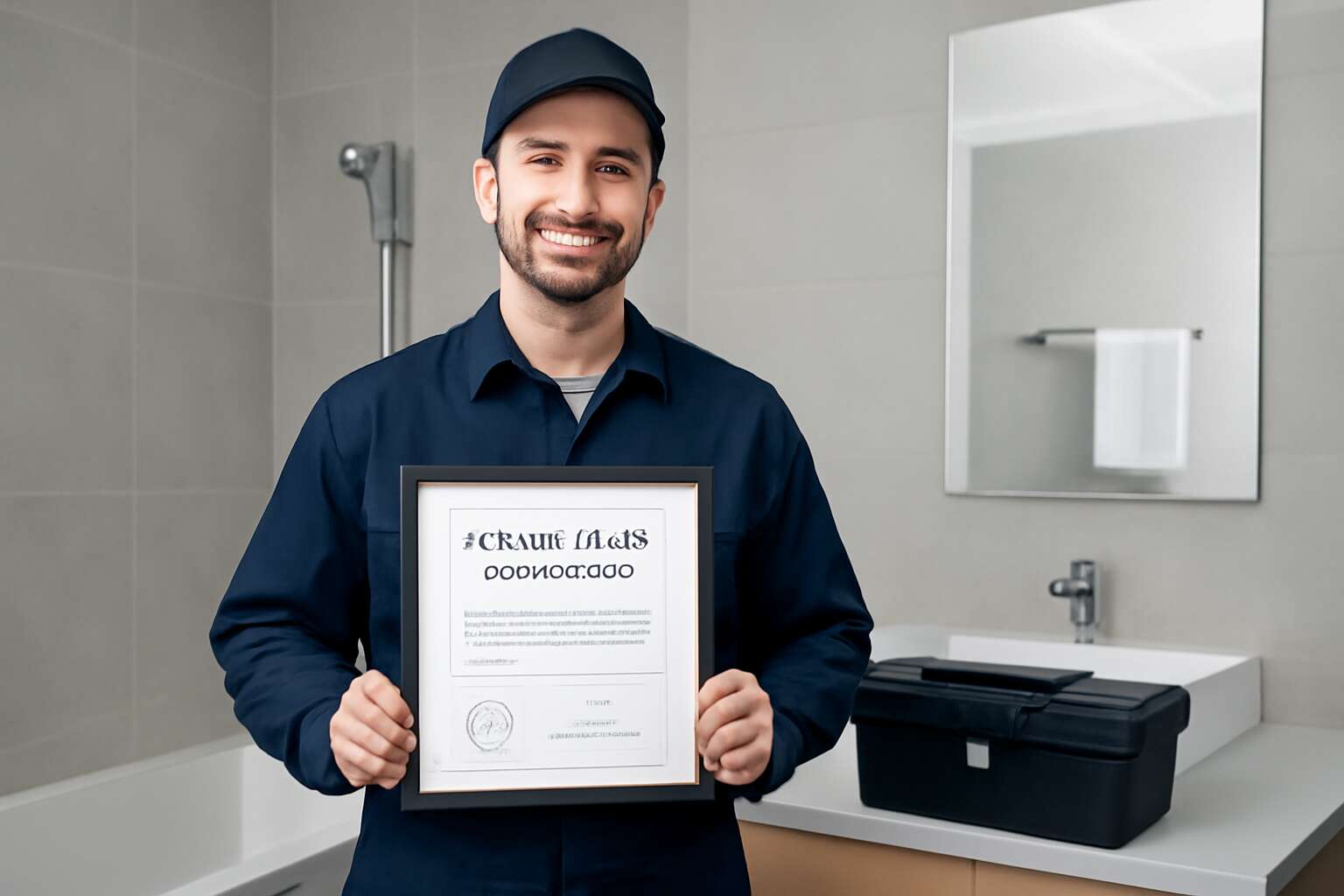
The certificate confirms plumbing work meets safety standards, verifies proper installation, and bears a licensed professional’s sign-off in line with local by-laws.
- Licensed plumber inspection
- Leak testing
- Code compliance
For buyers and owners, the certificate unlocks confidence, protects property value, and reduces future complications. It signals quality workmanship to the market, shaping the story from blueprint to living room.
Full appreciation comes when such certificates accompany title documents; they illuminate the journey from blueprint to living room, a hymn to responsible craftsmanship. That plumber compliance certificate reinforces the narrative of careful craft.
Why it matters for licensed plumbers
In South Africa, more than half of property inspections now reference a plumber compliance certificate — a quiet spark that turns risk into trust.
For licensed plumbers, this document is not mere ink; it is accountability etched into the home’s safety—a moral contract between tradesperson and home. The plumber compliance certificate signals that work has been examined, that fittings sit true, and that local by-laws have their due respect.
Three pillars emerge from the process:
- clear, verifiable sign-off by a licensed professional
- transparent records of installation and testing
- strict alignment with local by-laws and safety standards
When such certificates accompany title documents, they illuminate the journey from blueprint to living room, offering a quiet assurance that the house is held together by careful craft.
Key components and what it covers
More than half of property inspections reference a plumber compliance certificate, a quiet beacon over rising safety standards.
Understanding what it covers gives homeowners and tradespeople a shared language of trust, a map drawn in steel and care.
The document distills the journey from pipe to living space into tangible details:
- the scope of installed plumbing and fixtures
- date-stamped installation and who performed it
- test results for pressure, leakage, and drainage performance
- conformity with local by-laws and national safety codes
Alongside these elements, it notes any maintenance recommendations and the certificate’s validity window, guiding future inspections and title transfers with clarity.
In short, the plumber compliance certificate is more than a document—it’s a passport for safe home ownership, guiding future renovations and title transfers.
Differences between certificates and other permits
In South Africa’s safety-forward housing landscape, the plumber compliance certificate is a beacon that outshines mere paperwork. It hones in on the piping that sustains daily life, not every hammer of construction. Unlike a generic building permit or an electrical clearance, this certificate scrutinizes installed pipework, fixtures, and pressure tests to ensure conformity with local by-laws and national safety codes before a title passes hands.
Understanding how it differs from other permits helps homeowners and tradespeople speak the same language of trust.
- Certificate vs permit: scope, purpose, authority
- Timing: when it is issued, how long it remains valid
- Implications for title transfers and future renovations
This clarity, like a well-plumbed corridor, guides buyers with confidence and keeps tradespeople aligned in purpose.
Common myths about compliance certificates
Understanding the plumber compliance certificate is less about bureaucracy and more about reassurance. It signals that the plumbing system has been vetted for safety, longevity, and title-readiness—no crystal-ball gazing required. For buyers and sellers alike, it’s a language of trust rather than guesswork.
Common myths often mislead, so here’s clarity in small, sharp bites:
- Myth: It only checks obvious leaks. Reality: It scrutinises installed pipework, fixtures, and pressure-tested integrity, not just what you can see.
- Myth: If a seller shows a certificate, no further checks are needed. Reality: Certification is a snapshot; renovations or wear can change conditions and invite new questions.
- Myth: The certificate remains valid forever after title transfer. Reality: Validity is bounded by local by-laws and the certificate’s own term, and new work can trigger fresh assessment.
In any case, the document functions as a baseline signal of care—a quiet endorsement that helps doors close with confidence rather than debate.
Who issues and enforces the certificate
Issuing authorities at national and local levels
Who issues and enforces the plumber compliance certificate? In South Africa, the certificate is issued by a licensed plumber after a concise on-site assessment, sealing the work with professional assurance. Local authorities then review it before any property transfer or major permit proceeds.
Nationally, standards are forged by SABS and codified in the National Building Regulations, shaping plumbing expectations. Enforcement is mainly a local affair—municipal building control departments verify and uphold these standards on the ground.
- National level: SABS and Building Regulations
- Local level: Municipal building control
Thus the plumber compliance certificate travels from craft to watchful city oversight, binding workmanship to safety and value through enduring vigilance!
Role of regulatory bodies and plumbing associations
South Africa’s built environment runs on trust, and the plumber compliance certificate is the quiet seal that keeps it alive. Issued by a licensed plumber after a concise on-site assessment, it carries professional assurance and a readiness to stand up to scrutiny. National standards are forged by SABS and codified in the National Building Regulations, while enforcement remains predominantly a local affair—municipal building control departments uphold the rules where the work meets the ground!
- South African Bureau of Standards (SABS) sets the standards, codified in the National Building Regulations.
- Municipal building control checks and enforces on-site workmanship, making them the primary enforcers at local level.
- Plumbing associations such as SAPA and MPASA provide training, professional standards, and peer oversight to uphold ethical practice.
- Licensed plumbers seal the certificate with professional assurance, linking craft to safety and property value.
Together, these forces keep the system honest, safe, and valuable.
How inspectors assess compliance
In South Africa, the plumber compliance certificate is issued by a licensed plumber after a concise on-site assessment. Enforcement sits primarily with municipal building control departments, the local custodians of the National Building Regulations, with standards anchored by SABS. Industry bodies such as SAPA and MPASA provide training and peer oversight to keep practice ethical and capable.
Inspectors measure compliance through rigorous on-site evaluation, cross-checking against approved plans and the regulations. They look at layout, joint integrity, trap sealing, venting, drainage slopes, backflow protection, and fixture efficiency, then verify documentation and material compliance. The process unfolds with a quiet, exacting attention that safeguards homes and livelihoods.
- On-site assessment by a licensed plumber
- Cross-check against National Building Regulations
- Material and workmanship verification
Ultimately, the plumber compliance certificate becomes a seal of professional assurance, linking craft to safety and property value.
What happens if a certificate is revoked
The plumber compliance certificate is issued by a licensed plumber after an on-site assessment. Enforcement sits with municipal building control departments—the local custodians of the National Building Regulations—backed by the SABS standards framework and supported by the plumbing industry’s regulatory bodies. Inspectors verify documentation, cross-check against approved plans, and ensure workmanship aligns with the standards before the seal is affixed.
When a certificate is revoked, the consequences ripple through property value, occupancy, and peace of mind. The certificate loses validity, and the owner must address the defects with a fresh evaluation to restore compliance.
- The certificate becomes void and can no longer be used to claim compliance for renovations or sales.
- Rectification of non-conforming aspects is required, followed by a re-inspection and re-issuance.
- Penalties, delays, and potential impacts on occupancy, insurance, or transfer of ownership may follow.
Steps to obtain a plumbing compliance certificate
Prerequisites and required qualifications
Across South Africa, a plumber compliance certificate is the quiet guardian of safe water—even in the smallest rural homestead, it makes a big difference. A well-installed system can translate into tangible savings on water bills and reassure families when the taps are turned on after a dusty day.
Prerequisites and required qualifications for obtaining a plumber compliance certificate include holding a valid plumbing license, registration with the appropriate regulator, and adherence to local code requirements. The certificate process rewards diligence and honesty in tradespeople who value public health.
- Verify licensing status with the local authority.
- Gather registration documents and permit proofs.
- Arrange an inspection with an approved inspector.
With the seal, communities trust the work that keeps taps flowing and families safe when the sun goes down over the veld.
Document checklist and submission process
Safe water is the quiet guardian of everyday life in South Africa’s towns and on the back roads. A plumber compliance certificate signals that a system has been reviewed with care, turning a dusty rural morning into a moment of relief where taps behave and families breathe easier. In our communities, I see the relief a reliable system brings.
Typical documents accompanying the plumber compliance certificate process include:
- Valid plumbing license and regulator registration
- Proof of identity and property address
- Current municipal permit or service details
- Past inspection reports, if available
- Inspection booking reference and fee receipt
Submission is usually handled by an approved inspector who consolidates the materials and coordinates with the relevant authority for the plumber compliance certificate. After review, the authority confirms compliance and issues the certificate, allowing water to flow confidently and safely through the community.
Inspection scheduling and typical timelines
Across South Africa’s towns, a well-timed inspection can lift a household’s weight in a single breath. When pipes align and water flows true, everyday life regains its quiet rhythm.
The journey toward the plumber compliance certificate begins with an approved inspector who reviews the setup and coordinates with the relevant authority. Materials are consolidated and the booking is arranged, paving the way for approval.
- Schedule the inspection with an approved inspector at the site.
- Prepare license, permit, ID, address, and past reports.
- Await the decision and receive the plumber compliance certificate if compliant.
Timelines vary by municipality, but typically a booking occurs within two weeks, and the plumber compliance certificate is issued within days to weeks after a successful visit.
Common hurdles and how to avoid delays
“Getting it right the first time saves weeks,” a veteran inspector likes to say, and in South Africa that wisdom still moves the needle when chasing a plumber compliance certificate.
Steps to obtain include lining up an approved inspector who can assess the site and liaise with the local authority. Gather and present the necessary documents, then lock in the on-site inspection.

- Engage an approved inspector to verify the layout and coordinate with the authority.
- Prepare and submit licenses, permits, ID, address proof, and any past reports.
- Book the site visit and confirm the expected timeline with the inspector.
Common hurdles crop up fast: missing paperwork, ambiguous drawings, and booking slots that vanish like sand in a hurry. To dodge delays, pre-fill forms, keep copies of IDs, and maintain clear contact with the inspector. This keeps the certificate moving smoothly.
Fees and payment methods
In South Africa, a missing signature can stall a plumber compliance certificate for weeks, and the cost is more than money—it’s momentum that leaks away from a project. Steps to obtain include lining up an approved inspector who can assess the site and liaise with the local authority. Gather and present the necessary documents, then lock in the on-site inspection. Clear timing helps the certificate move smoothly.
- Engage an approved inspector to verify the layout and coordinate with the authority.
- Prepare and submit licenses, permits, ID, address proof, and any past reports.
- Book the site visit and confirm the expected timeline with the inspector.
Fees and payment methods vary by authority and scope. Expect an administration fee plus the inspection fee, with payment options including EFT, debit/credit card, or online portal. Transparent billing helps keep the plumber compliance certificate moving without detours!
Regional regulations and compliance considerations
Differences in requirements by country
Regional rules shift like water in a misbehaving pipe. In South Africa, municipal and provincial authorities tailor their own clearance steps, so a plumber compliance certificate can look wildly different from Cape Town to KZN. The certificate signals plumbing decency, yes, but the exact hurdles—from paperwork to inspections—vary with each region’s appetite for red tape.
Here are the regional variables to expect:
- Permitting authority (municipal vs regional)
- Documentation and plan approvals required
- Inspection cadence and acceptable timelines
- Fees, renewal cycles and penalties for non-compliance
National standards provide a baseline, but local by-laws inject distinct requirements. Without alignment, the certificate loses its teeth, turning a tidy project into a negotiation saga.
State or provincial differences within a country
In South Africa, regional rules drift like water through a misbehaving pipe, and a plumber compliance certificate can look wildly different from Cape Town to Pietermaritzburg. It’s not mere red tape; it’s a mirror of local priorities and risk tolerance. The paperwork you file today may be accepted yesterday somewhere else, and that churn can quietly shape a project’s rhythm—from approvals to inspections, and the unspoken compromises between them.
- Digital vs. paper submission norms
- Inspection cadence and backlog pressure
- Regional fee structures and renewal cycles
- Inter-agency coordination within the province
Knowing these regional quirks lets practitioners navigate with steadier hands, preserving the craft and its purpose.
Local council codes and amendments
In South Africa, regional rules move like water through a sieve; as one veteran municipal inspector puts it, “what passes today may be redirected tomorrow.” Local council codes and amendments sculpt the plumber compliance certificate in city-specific ways—Cape Town’s backflow emphasis, Pietermaritzburg’s testing windows, and other towns leaning to their own priorities.
To stay in step, monitor the local gazette and by-laws. The following often matters:
- Local council codes and amendments dictate submission windows, inspection cadence, and acceptable materials for compliance-related documents.
- Changes are published in municipal gazettes; reviewing these before scheduling work can prevent delays and keep credentials current.
Keep a wary eye on municipal updates so the certificate stays credible in the eyes of regulators and clients alike.
Cross-border projects and compliance considerations
Regional regulations in South Africa move like water through a drought-stricken valley; a cross-border project must heed the different rules that govern backflow testing windows, approved materials, and permit transfer. A plumber compliance certificate remains a non-negotiable anchor in any multi-jurisdiction workflow, signaling competence across borders.
- Monitor each province’s submission windows and inspection cadences to avoid delays.
- Harmonize materials and testing standards so your work passes muster wherever you operate.
- Coordinate cross-border inspectors and maintain intact documentation for easy verification.
With proactive planning and clear communication, regional nuances become navigable corridors rather than obstacles.


0 Comments